Pull Out And Attach The Rope
-
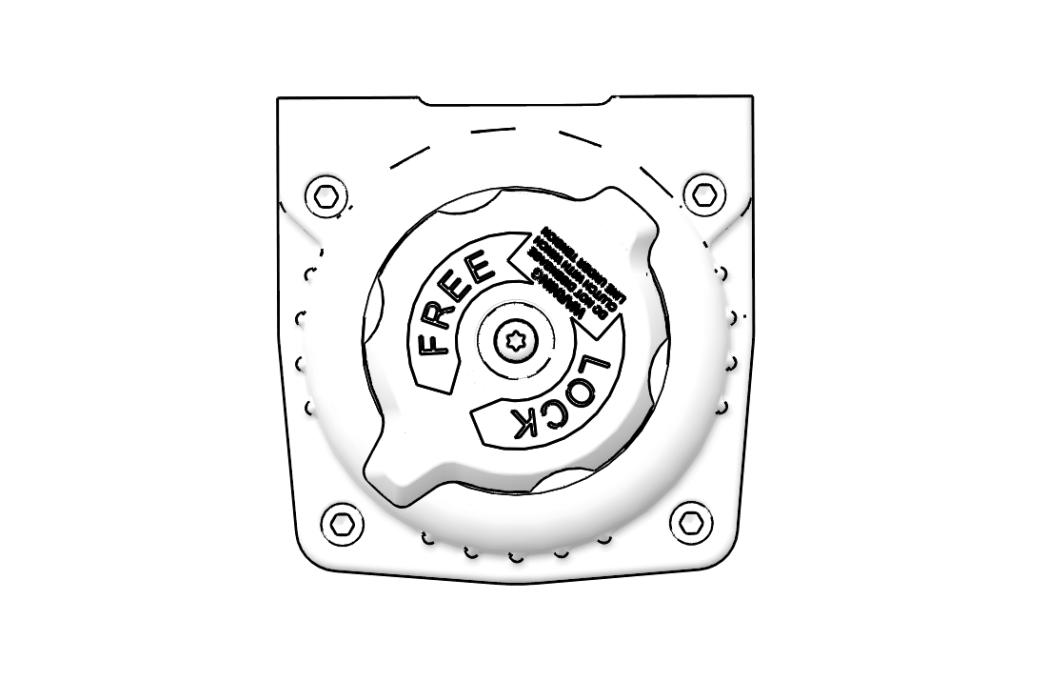
Turn the clutch lever on the winch to disengage the clutch and allow free spooling. On Pro winches, the correct position will be marked with an N (Neutral) visible through the clutch engagement knob. Other winches will be marked “LOCK” and “FREE.” Manual unspooling using this method conserves battery power.
IMPORTANTDo not attempt to turn the clutch lever when the rope is under tension. Damage to clutch lever could occur.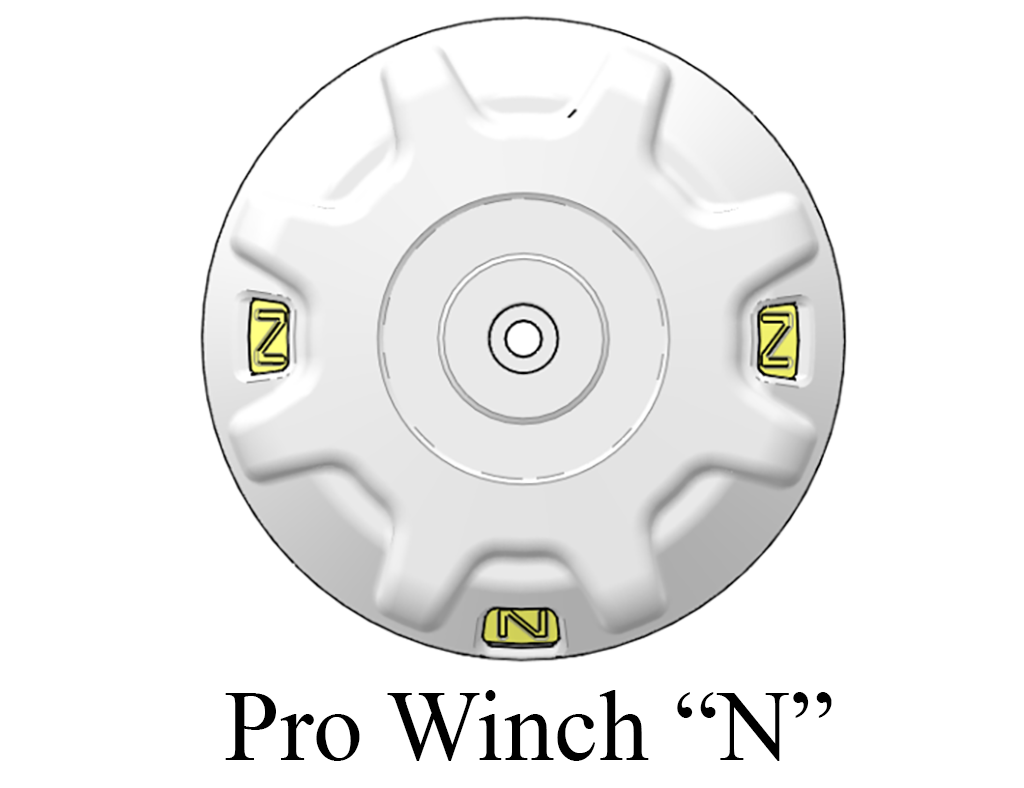
-
Grab the hook strap, do not grab the hook or the rope. Use the strap to pull the rope to the load or anchor point. Avoid pulling out more rope than necessary.
WARNINGMake sure the minimum length of rope remains wrapped around the drum at all times. Wire and synthetic rope should not have fewer than five rotations on the drum. This provides the friction needed for the drum to pull the rope and move the load. Attempting to winch a load without enough rope on the drum could cause the rope to come loose from the drum resulting in unintended motion or loss of load. Ropes and cables are marked with red paint to signify the minimum safe working wraps. If any red extends through the fairlead, rewind the winch until no more red is visible past the fairlead before applying tension to the rope. -
Use an anchor point aligned directly in front of the vehicle whenever possible. Avoid winching with the winch rope at an angle to the center line.
-
When attaching the hook to a natural anchor point, use additional rigging components such as a tree trunk protector so the winch rope remains completely straight.
-
When attaching the hook to a vehicle, attach to a part of the frame intended for towing such as a tow loop, tow hook or hitch.
WARNINGImproper use of the hook can cause rope failure which can result in serious injury or death.-
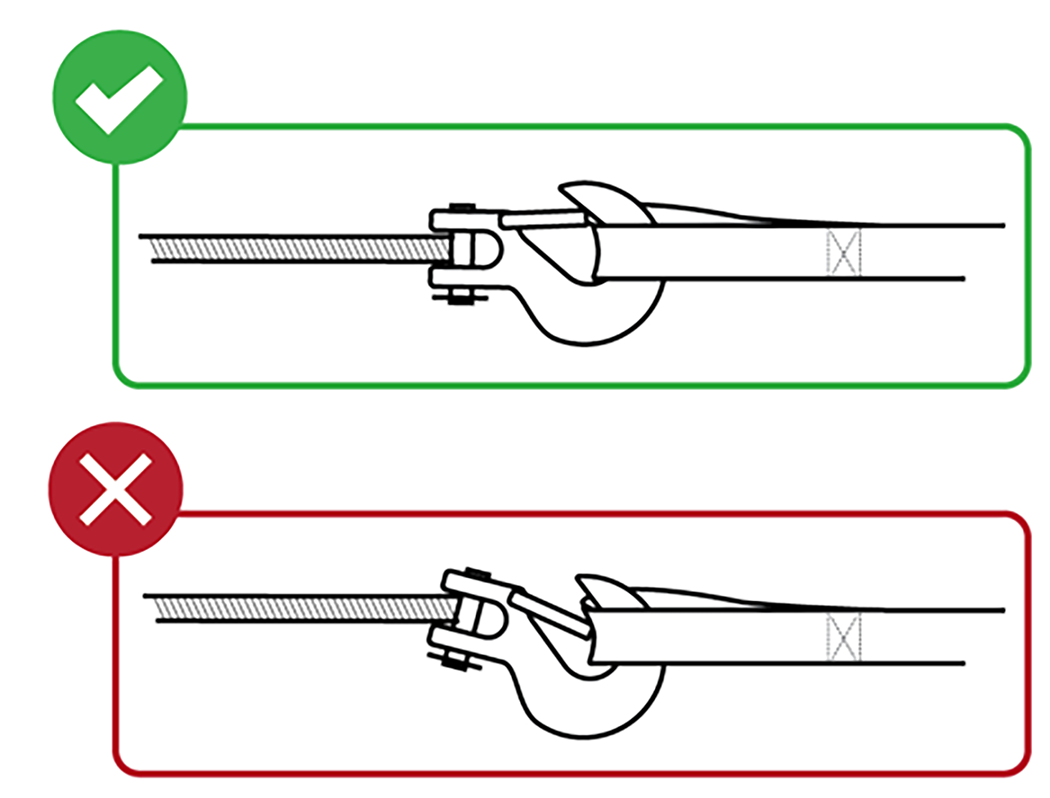
Make sure the hook latch is fully closed. Do not load at the hook tip or latch.
-
Never attach the hook back onto the rope.
WARNINGAttaching the hook back onto the rope can cause rope failure, which could result in serious injury or death.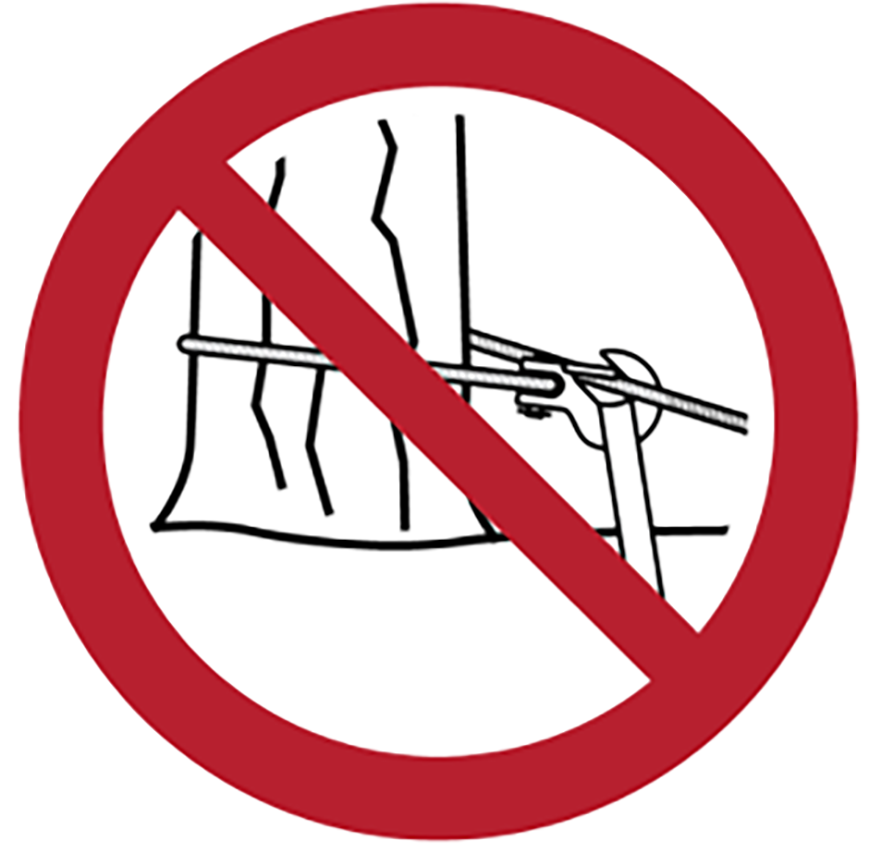
-
Never attach the hook to a suspension component, brush guard, bumper, hitch ball or cargo rack.
-