Brakes
The front and rear brakes are hydraulic disc type brakes. Press down on the brake pedal to engage the brakes.
Brake Fluid
Inspect the brake system routinely. Inspect the level of the brake fluid before each operation.
Change the brake fluid every two years
and any time the fluid becomes contaminated, the fluid level is below
the minimum, or if the type and brand of the fluid in the reservoir 1 are unknown.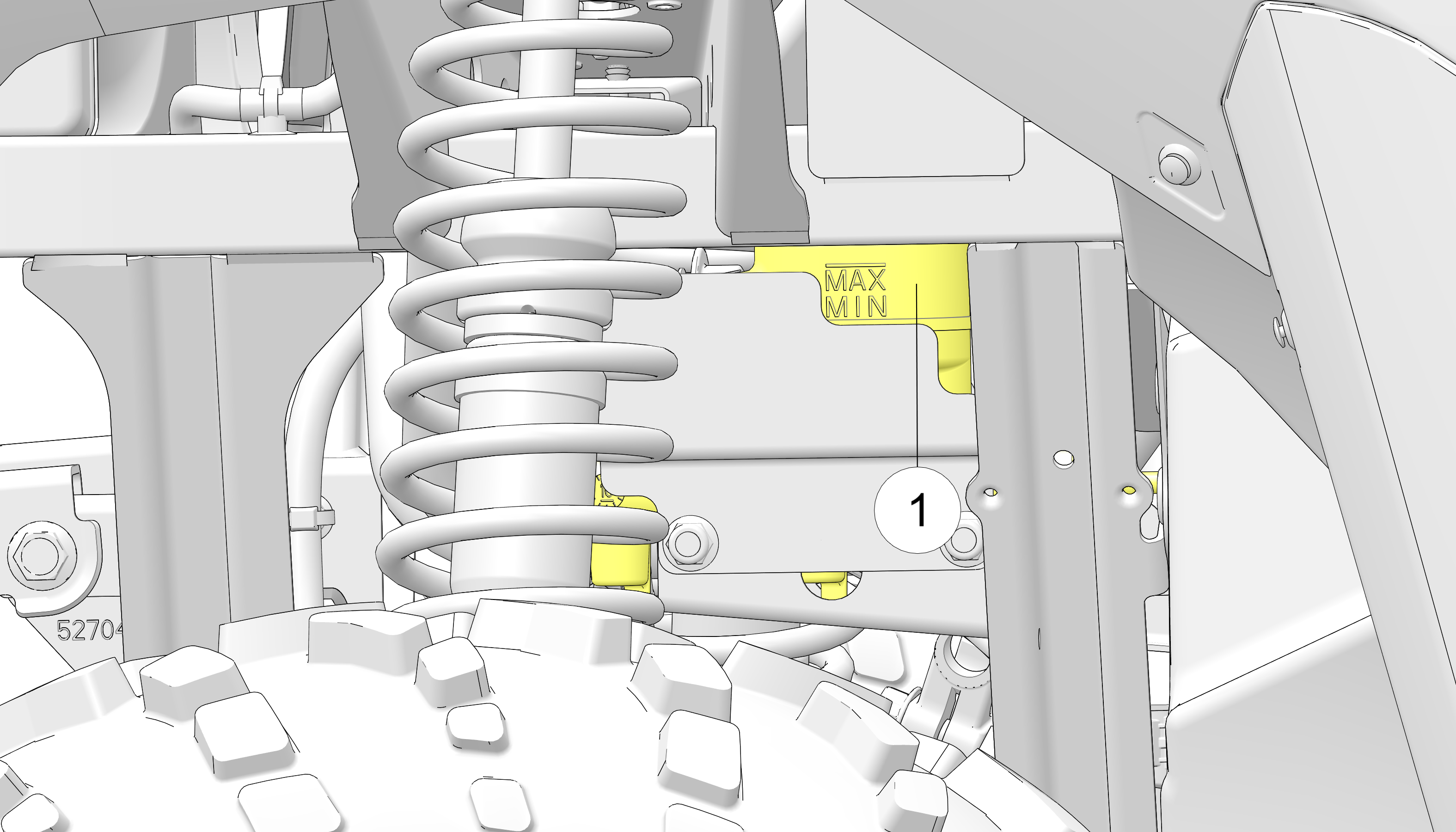
-
Position the vehicle on a level surface.
-
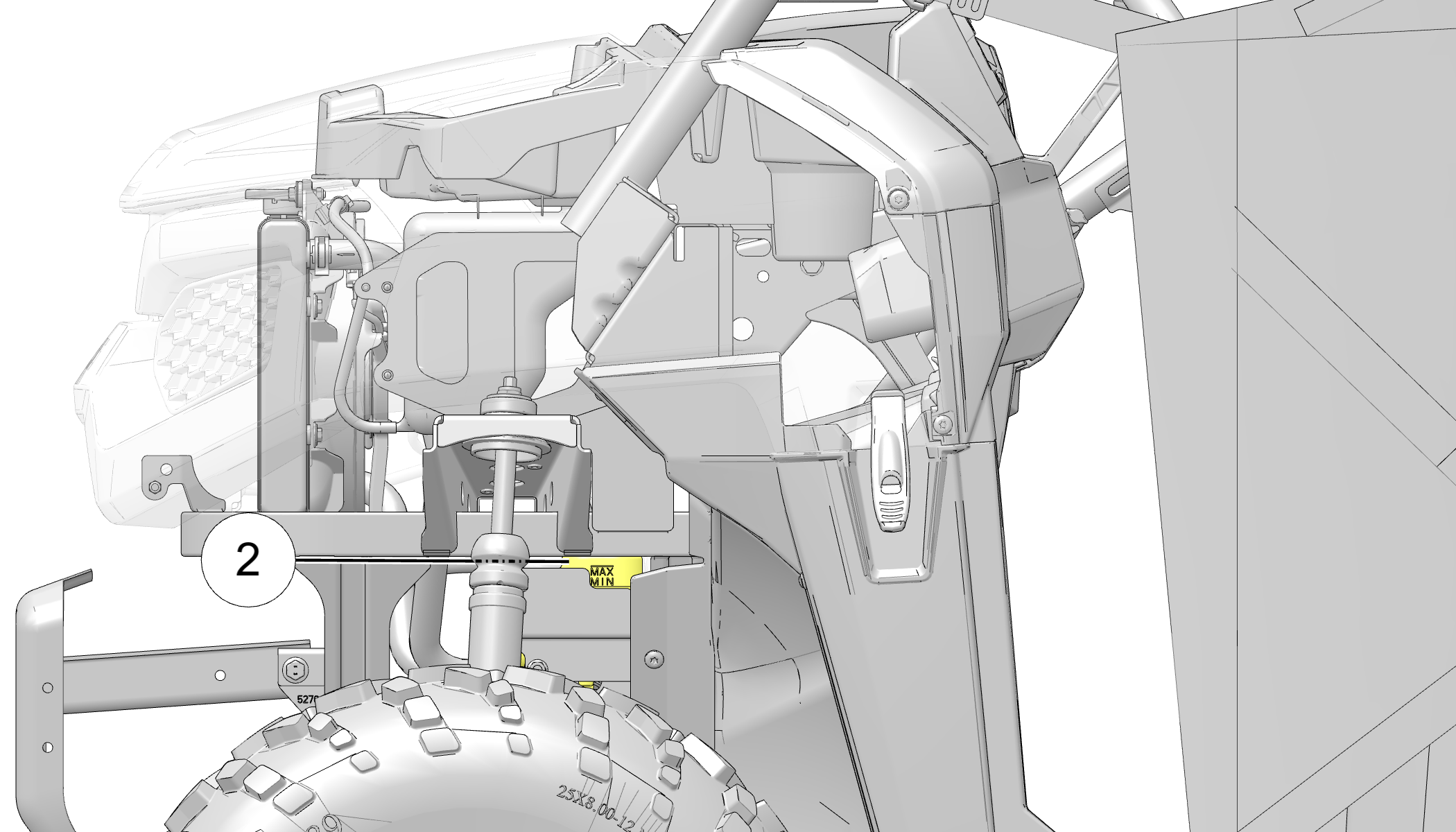
View the brake fluid level at the reservoir 2 in the driver’s side wheel well. The level should be between the upper (MAX) and lower (MIN) level lines.
-
If the fluid level is lower than the lower (MIN) level line, fluid will need to be added to the brake reservoir.
-
Open the hood.
-
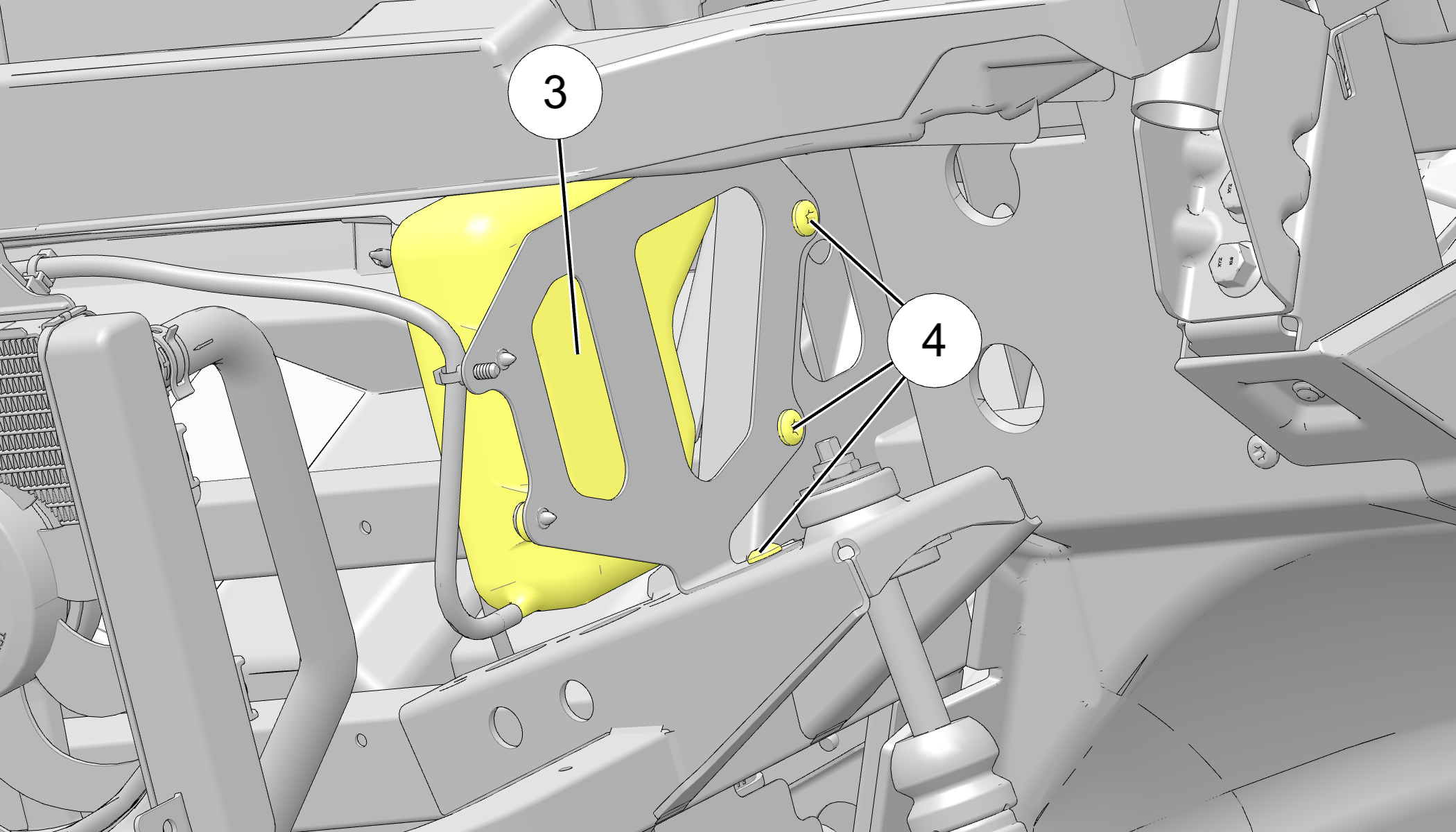
Locate the coolant overflow assembly 3 on the driver’s side of the vehicle. Remove the coolant overflow assembly 3 by removing the 3 bolts 4 securing the coolant overflow assembly to the vehicle chassis. The appropriate T40 Torx Allen wrench is located in the vehicle’s tool kit.
-
Relocate the coolant reservoir towards the front of the vehicle and place it on the vehicle frame. Use a securing strap to temporarily secure the coolant reservoir to prevent leakage.
NOTICEIf the coolant reservoir is placed near the radiator, place a protective cover or cloth between the coolant reservoir and radiator. The coolant reservoir assembly may cause damage to the radiator if an impact occurs. -
Remove the brake reservoir cap and add the required amount of brake fluid.
-
Reinstall the brake reservoir cap.
-
Reinstall the coolant reservoir using the existing fasteners 3.
TORQUE71 in lbs (8 Nm ) -
Apply the brake forcefully for a few seconds and check for fluid leakage around the fittings.
Brake Inspection
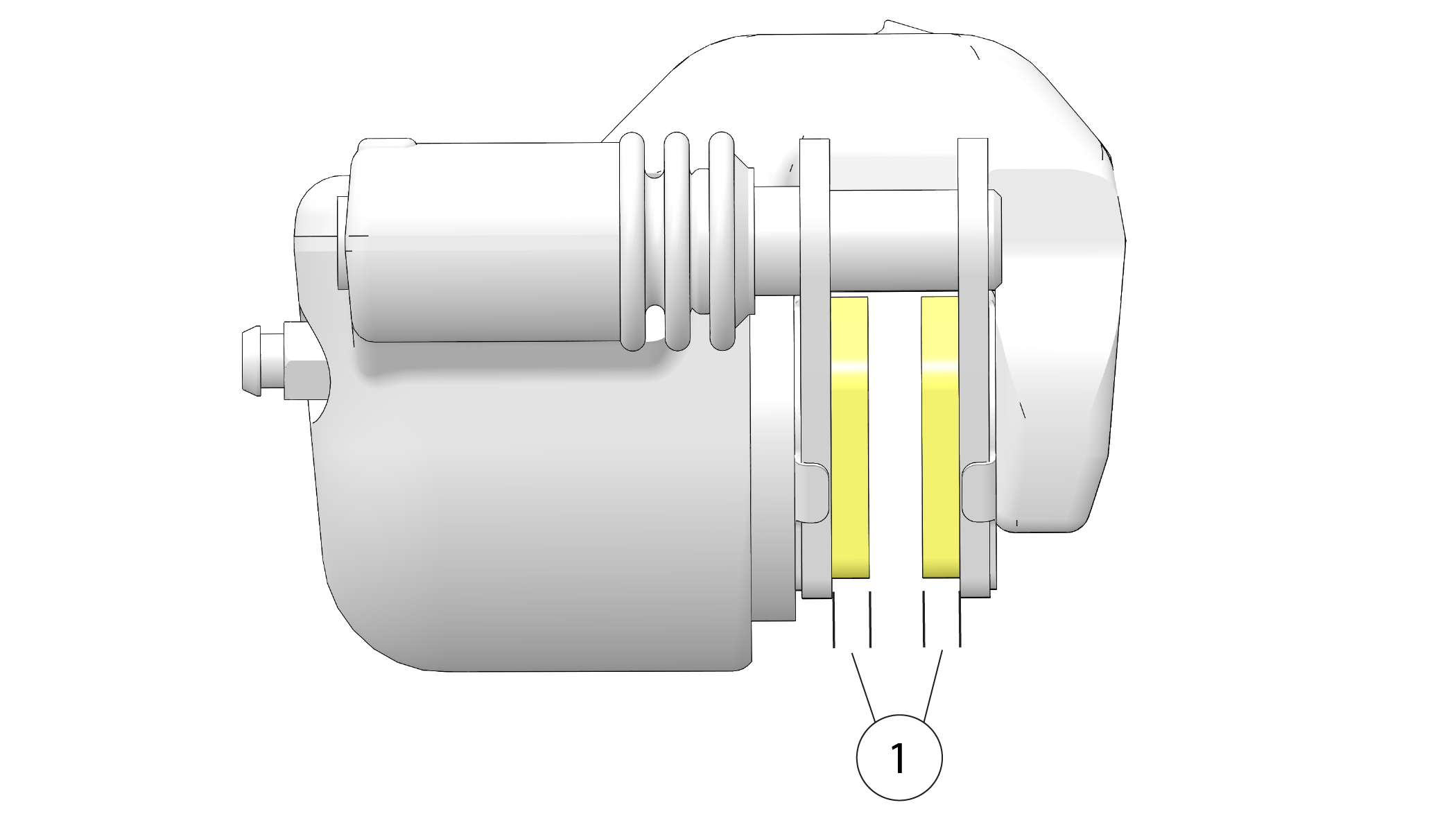
Do not apply WD-40® or any petroleum product to brake discs. These types of products are flammable and may also reduce the friction between the brake pad and caliper.
|
 |